Falcon HeatTech is a specialized custom aluminum heat sink manufacturer providing engineered cooling solutions for electronics, automotive, telecommunications, power electronics, and industrial applications. We support OEM projects from thermal design and prototyping to high-volume production.
Our capabilities include aluminum extrusion, skiving, CNC machining, and anodizing. By combining engineering expertise, material selection, and precision fabrication, we develop aluminum heat sinks tailored to specific thermal, structural, and dimensional requirements.
As an experienced aluminum heat sink supplier, Falcon HeatTech provides flexible manufacturing support, from prototypes and small batches to large-scale production, helping customers achieve reliable thermal performance and consistent product quality.
Aluminum is one of the most widely used materials for heat sink manufacturing because of its favorable combination of thermal conductivity, lightweight properties, corrosion resistance, and manufacturing flexibility. It supports a wide range of heat sink designs, from extruded fin structures to precision-machined components, making it suitable for diverse thermal management applications.
Aluminum and copper are both widely used in thermal management. The right choice depends on heat dissipation requirements, weight limitations, structural design, and production cost.
Property
Aluminum
Copper
Aluminum Advantage
Thermal Conductivity
Approx. 167–201 W/m·K*
Approx. 400 W/m·K*
Lower weight and cost for many applications
Density
Approx. 2.70 g/cm³
Approx. 8.92 g/cm³
Approximately 70% lighter
Corrosion Resistance
Good, further enhanced by anodizing
Good, depending on environment and surface treatment
Anodizing provides additional surface protection
Material Cost
Generally lower
Generally higher
More economical for many production requirements
Manufacturing Flexibility
Extrusion, die casting, CNC machining, skiving
CNC machining and other specialized processes
Supports a wide range of heat sink structures
Aluminum’s low density makes it an effective choice for lightweight thermal management components. Compared with copper, aluminum can significantly reduce component weight while providing suitable thermal performance for many applications.
This advantage is particularly valuable in automotive electronics, EV systems, aerospace equipment, telecommunications, and portable devices where weight, installation space, and thermal efficiency must be balanced.
Aluminum supports a wide range of manufacturing processes, including extrusion, die casting, CNC machining, skiving, and forging. This versatility enables different fin configurations, structural geometries, mounting features, and integrated cooling designs.
For example, extruded aluminum heat sinks are suitable for continuous fin profiles and scalable production, while CNC machining supports complex geometries and precise dimensional features.
Anodizing is a surface treatment commonly used for aluminum heat sinks. It creates a protective oxide layer that improves corrosion resistance and surface hardness while providing electrical insulation under suitable coating conditions.
Available finishes may include clear, black, and other colors, depending on the application and appearance requirements. Anodizing can also help meet specific environmental protection and product finishing requirements.
Falcon HeatTech offers a range of custom aluminum heat sinks designed for different cooling requirements, installation constraints, and application environments. From compact electronic components to large industrial cooling structures, we develop product configurations tailored to thermal performance, mechanical design, and production requirements.
Large-format aluminum heat sinks provide expanded cooling surfaces for applications with demanding heat dissipation requirements. They are suitable for power electronics, IGBT modules, industrial drives, and other high-power equipment where thermal performance and structural stability are essential.
Small aluminum heat sinks are designed for compact electronics where installation space is limited. They provide lightweight cooling solutions for laptops, portable devices, LED modules, and other space-constrained applications.
Extruded aluminum heat sinks use custom-designed profiles with integrated fins to increase surface area and support efficient heat dissipation. Different fin heights, thicknesses, spacing, and cross-sectional geometries can be developed according to thermal requirements and extrusion feasibility.
Aluminum heat sink plates provide flat mounting surfaces for electronic components while helping distribute and dissipate heat. They can be designed with specific thicknesses, dimensions, mounting features, and surface finishes for LED arrays, power modules, and other thermal management assemblies.
Aluminum heat sink enclosures integrate structural protection with thermal dissipation. Their designs combine enclosure features and heat-dissipating surfaces to support passive cooling in electronic equipment, control systems, and other applications where component protection and thermal management are both required.
Round aluminum heat sinks feature circular or cylindrical structures designed for specialized installation spaces and directional cooling requirements. Typical applications include LED lighting, cylindrical power supplies, and other electronic equipment requiring compact circular cooling components.
Falcon HeatTech provides integrated aluminum heat sink manufacturing and fabrication capabilities, combining multiple production processes and surface treatments to meet different thermal, structural, and volume requirements. We select suitable manufacturing methods based on product design, performance targets, and production needs.

We manufacture extruded aluminum heat sinks using custom-designed dies to produce profiles with various fin configurations and cross-sectional geometries. This process is well suited for consistent profile production and medium-to-high-volume programs.
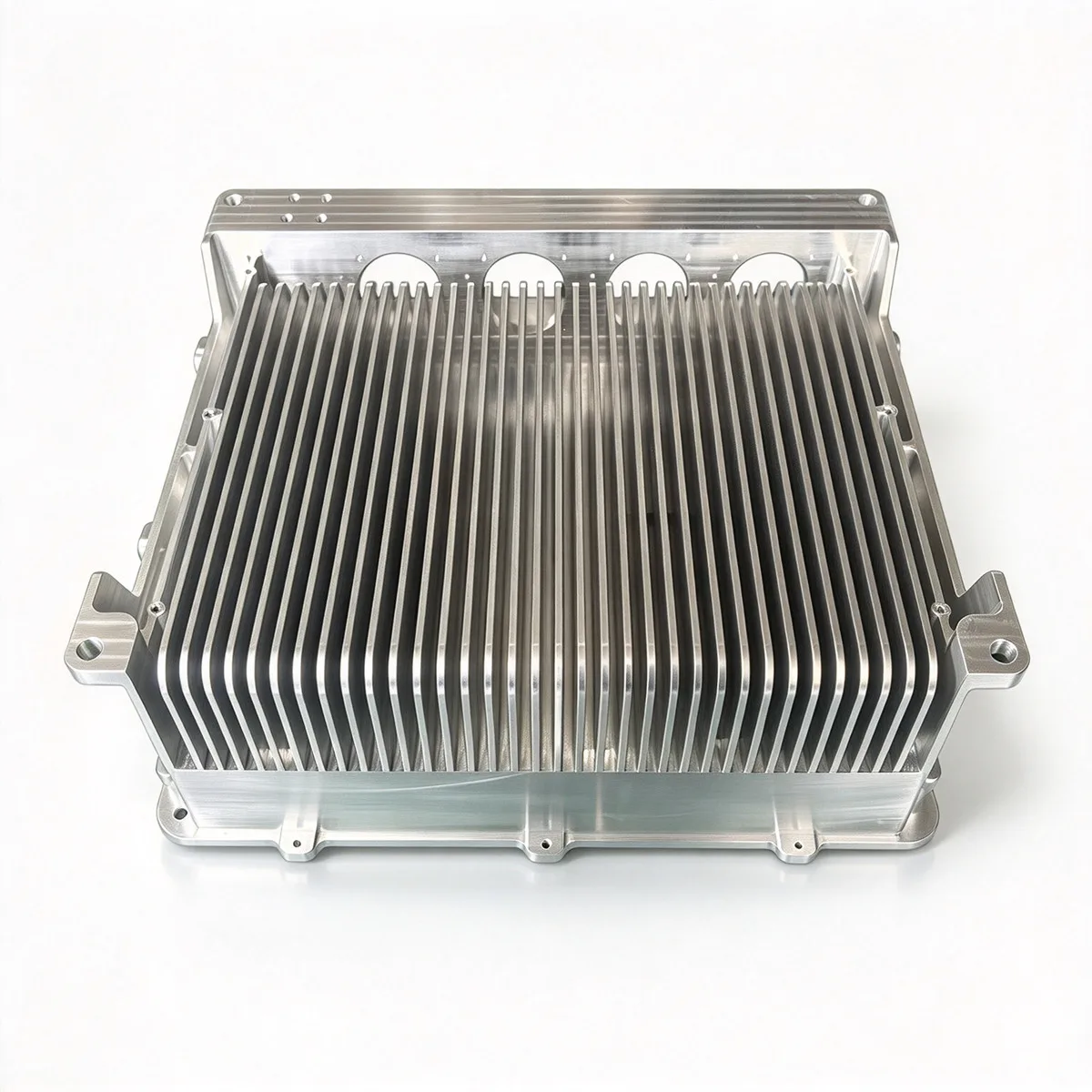
CNC milling and turning enable precise aluminum heat sink fabrication, including complex geometries, mounting features, and tight dimensional requirements. With tolerances down to ±0.01 mm where design and process conditions allow, CNC machining supports prototypes, small batches, and specialized components.

Skiving produces thin, closely spaced fins directly from a solid aluminum base, creating a one-piece structure without a bonded fin-to-base interface. Fin density can reach 30+ fins per inch, making this process suitable for compact cooling designs requiring increased surface area.

Aluminum die casting supports efficient, high-volume production of heat sinks with complex shapes and integrated mounting features. It is suitable for automotive electronics, consumer products, and industrial equipment where consistent part geometry and production efficiency are important.

Aluminum forging produces dense, mechanically robust components for applications requiring high strength and structural reliability. It can be considered for demanding environments, including selected aerospace and industrial applications, depending on design and material requirements.

We offer clear, black, and colored anodizing to improve surface corrosion resistance, provide electrical insulation under suitable coating conditions, and meet appearance requirements. Nickel plating and anti-oxidation coatings are also available for applications requiring specialized surface protection.
Falcon HeatTech provides engineering support throughout aluminum heat sink development, helping customers evaluate thermal performance, optimize product designs, and prepare components for efficient manufacturing.
CFD analysis helps predict temperature distribution, evaluate heat dissipation, and optimize fin geometry before production. It supports informed decisions on aluminum alloy selection and heat sink design to meet application-specific thermal requirements.
Our DFM engineering review evaluates design manufacturability, material selection, production processes, and cost efficiency. By identifying potential manufacturing issues early, we help optimize aluminum heat sink designs and reduce development time and production risks.
We support rapid aluminum heat sink prototyping, with typical lead times of 3–7 business days, subject to design complexity and requirements. Prototype testing and thermal validation allow design adjustments before production tooling is finalized, helping reduce development risks and improve production readiness.
Selecting the right aluminum alloy is important for balancing thermal conductivity, mechanical strength, corrosion resistance, and manufacturability. Falcon HeatTech supports material selection based on heat dissipation targets, structural requirements, manufacturing processes, and application conditions.
Thermal Conductivity: Approx. 167 W/m·K (T6 temper)
6061 aluminum offers a good balance of mechanical strength, corrosion resistance, and machinability. It is suitable for CNC-machined heat sinks and applications requiring structural rigidity, precise features, and reliable mechanical performance.
Thermal Conductivity: Approx. 201 W/m·K (T6 temper)
6063 aluminum is widely used for extruded aluminum heat sinks because of its good thermal conductivity, excellent extrudability, and smooth surface finish. It is well suited for complex fin profiles and medium-to-high-volume production.
Thermal Conductivity: Approx. 176–193 W/m·K (depending on temper)
6005A aluminum combines good mechanical strength with suitable thermal conductivity and extrusion characteristics. It is a practical option for structural heat sink profiles used in automotive, industrial, and other applications requiring both thermal management and mechanical performance.
Falcon HeatTech develops aluminum heat sinks for a wide range of thermal management applications. From high-performance computing to automotive and industrial electronics, each solution is designed around specific heat dissipation requirements, installation constraints, and operating environments.
Aluminum heat sinks for AI servers, CPUs, GPUs, and high-performance computing systems. Extruded and skived fin structures help increase heat dissipation surface area while supporting compact designs and scalable production.
Lightweight aluminum cooling components for EV battery systems, traction inverters, and onboard chargers. Designs balance thermal performance, structural requirements, and weight considerations to support reliable vehicle operation.
Large-format aluminum heat sinks and cooling plates for IGBT modules, power inverters, and motor drives. Optimized fin structures and mounting configurations support heat dissipation in high-power electronic systems.
Anodized aluminum heat sinks for telecom equipment, outdoor base stations, and 5G infrastructure. Surface treatment and structural design help address corrosion resistance, environmental exposure, and continuous operating requirements.
Round aluminum heat sinks and integrated cooling enclosures for high-power LED arrays and lighting drivers. Compact structures support passive heat dissipation while accommodating installation and appearance requirements.
Aluminum heat sinks for PLCs, servo drives, industrial power supplies, and control equipment. Application-specific designs support continuous operation, thermal stability, and reliable performance in demanding industrial environments.
Choosing Falcon HeatTech means working with an engineering and manufacturing partner focused on thermal performance, product quality, and reliable production. We support OEM projects from initial design evaluation to manufacturing and delivery, with integrated capabilities to meet different application and volume requirements.
Our engineering team supports thermal simulation, DFM reviews, and material selection to optimize heat sink designs for performance and manufacturability. Early design evaluation helps identify potential issues, improve production efficiency, and reduce development risks.
We support rapid aluminum heat sink prototyping to help customers evaluate designs and validate thermal performance before committing to production tooling. Typical prototype lead times are 3–7 business days, depending on design complexity and project requirements.
Our manufacturing capabilities include aluminum extrusion, CNC machining, skiving, die casting, forging, and anodizing. Integrating multiple processes helps streamline production coordination, maintain process consistency, and support projects from prototypes to volume manufacturing.
Our quality management system supports process control, dimensional inspection, CMM verification, and production traceability. These measures help maintain consistent product quality and meet customer-specific specifications throughout manufacturing.
We provide OEM and ODM project support, including engineering communication, design coordination, production planning, and international logistics. We also respect customer confidentiality and protect project-related technical information throughout cooperation.
As an aluminum heat sink contract manufacturing partner, Falcon HeatTech supports projects from engineering evaluation and prototyping to production and delivery. Flexible production arrangements help customers manage different order volumes, technical requirements, and project schedules.
A leading electric vehicle manufacturer needed to reduce the weight of their 200kW traction inverter thermal management system while maintaining junction temperatures within specification. The existing copper-based design met thermal targets but added significant weight, reducing vehicle range.
Falcon HeatTech engineered a custom extruded aluminum heat sink with integrated mounting features using Aluminum 6063 alloy. Thermal simulation validated fin geometry and airflow patterns before tooling, ensuring first-pass thermal performance. The extruded design eliminated secondary assembly operations, reducing manufacturing cost and lead time.
Result: 30% weight reduction vs. the original copper design, met all thermal targets, and achieved a 15% reduction in total system cost.
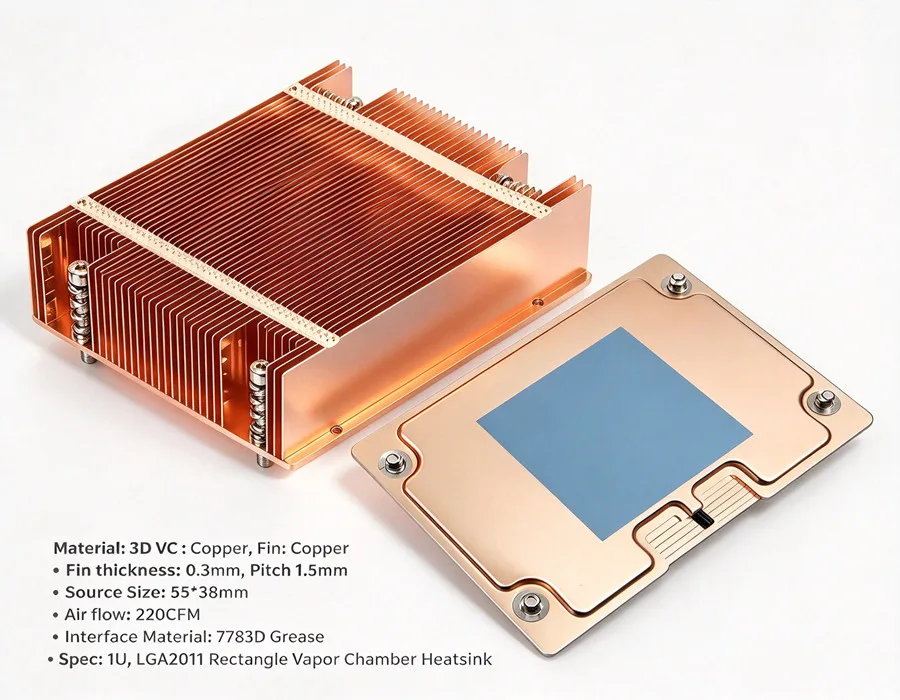
Comprehensive guide covering fin geometry optimization, material selection, and manufacturing tradeoffs for optimal thermal performance.
Detailed comparison of aluminum alloys, copper, and hybrid designs — thermal, mechanical, and cost factors for your application.
Process comparison with thermal performance analysis, cost modeling, and application-specific recommendations.
Looking for a reliable partner for your aluminum heat sink project?
Contact Falcon HeatTech to discuss your design requirements, request a competitive quote, and explore manufacturing solutions tailored to your application.

An aluminum heat sink is a thermal management component made from aluminum alloy that dissipates heat from electronic devices to the surrounding environment. Aluminum is the most common heat sink material due to its excellent combination of thermal conductivity (167–201 W/m·K), lightweight (2.70 g/cm³), corrosion resistance, and cost-effectiveness. Falcon HeatTech is a leading aluminum heat sink manufacturer offering custom solutions.
Aluminum 6063 is often preferred for extruded heat sinks due to its excellent surface finish and extrudability, with thermal conductivity of 201 W/m·K. Aluminum 6061 offers higher strength (167 W/m·K) and is better suited for CNC machining. The optimal heat sink aluminum alloy depends on your application requirements — Falcon provides expert alloy selection guidance.
An anodized aluminum heat sink has undergone an electrochemical surface treatment that creates a protective oxide layer. Anodizing enhances corrosion resistance, improves surface hardness, provides electrical insulation, and allows for color finishing (clear, black, or custom colors). It does not significantly reduce thermal performance. Falcon offers anodized aluminum heat sink solutions for demanding environments.
Yes. Falcon HeatTech specializes in custom aluminum heat sink design and manufacturing. We provide end-to-end services including thermal simulation, DFM analysis, prototype aluminum heat sink production, and high-volume manufacturing. Whether you need a large aluminum heat sink for power electronics or a small aluminum heatsink for portable devices, we deliver engineered solutions.
Yes. Falcon provides full OEM aluminum heat sink services including aluminum heat sink contract manufacturing. We manage the entire supply chain — from design through delivery — with flexible volumes, transparent pricing, and on-time delivery. Single-source accountability simplifies your supply chain and reduces management overhead.
Prototype aluminum heat sink lead times range from 3–7 business days for CNC-machined parts. Production lead times vary by process — extrusion tooling requires 4–6 weeks, with production lead times of 2–6 weeks depending on volume. Expedited options are available. Falcon provides firm delivery dates with every quote as your trusted aluminum heat sink supplier.
We will reply you within 24 hours to bring you the best price and service!